Computer Vision
Object detection and segmentation, pedestrian and vehicle analysis, facial expression recognition, real-time vision with YOLO-family models and SAM 2.
Seeking a fully funded PhD in AI (Fall 2027)
Aspiring PhD Researcher in AI
Data Scientist · ML/DL/AI & Computer Vision researcher · Competitive programmer · Educator
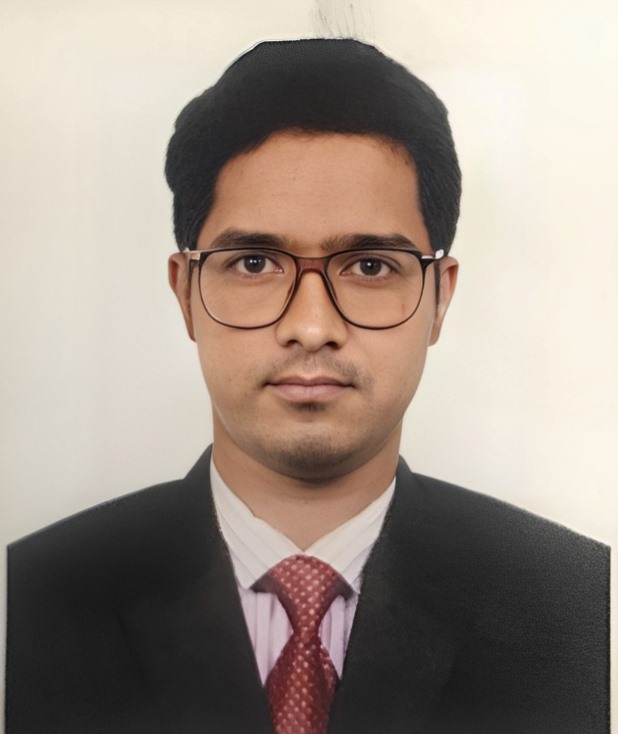 Computer VisionDeep LearningYOLOAlgorithms
I am a Computer Science and Engineering graduate with a deep passion for solving problems through code. Since 2014, I have immersed myself in competitive programming, which has sharpened my ability to think critically and design efficient algorithms.
My research is in computer vision and deep learning for medical images. I have one peer-reviewed paper (Springer Nature, 2026) and one paper under review at IEEE ISBI 2027, a multi-seed benchmark of nano YOLO detectors for blood-cell detection. Six more manuscripts are in preparation, on acquisition and stain shift, few-shot learning with foundation models, polyp segmentation, CPU deployment and people counting in drone video. I run every experiment on free cloud GPUs and write my own tools, many of which are open source.
Today I work as an Advanced ICT Officer at CNRS-UNHCR, where I teach students and apply technology in a humanitarian context — and I have written a free, university-level curriculum of 273 lectures on AI, Machine Learning and Deep Learning.
Object detection and segmentation, pedestrian and vehicle analysis, facial expression recognition, real-time vision with YOLO-family models and SAM 2.
Label-efficient learning, few-shot classification with foundation models (BiomedCLIP, CLIP, DINOv2), knowledge distillation and INT8 quantisation for CPU deployment.
Models that stay reliable under distribution shift: calibration, domain adaptation without labels, conformal uncertainty, and AI for social good in humanitarian settings.
Blood-cell microscopy, polyp segmentation and skin-lesion images: detection, counting and classification across laboratories and stains.
Statistics, data analysis, visualisation and end-to-end data pipelines.
Data structures, algorithm design and complexity — 12+ years of contest problem solving (since 2014).
Computer vision for safety and human understanding — with a focus on real-world conditions in Bangladesh.
Anish Giri, Janin A. Apurba, Abu Zahid Md Jalal Uddin, Shawkat Islam Rizon, Most Rubaiya Begum, A. S. M. Ahsanul Sarkar Akib, Manish Giri, Bishesh Shahi, Monica Khadgi
Proceedings of the International Conference on Computational Technologies for Research in Data Analytics (ICCTRDA 2025), Lecture Notes in Networks and Systems, Springer Nature, 2026, pp. 218–233
Real-time facial expression analysis using the YOLOv11 detection architecture.
Janin A Apurba, Huzzatul Jannat Shethil, Jamon A Aranna
Submitted to the IEEE International Symposium on Biomedical Imaging (ISBI 2027)
Three-seed benchmark of YOLOv8n, YOLO11n, YOLO12n and YOLO26n on the TXL-PBC blood-cell dataset, with corruption robustness, ensembles, sliced inference and single-thread CPU deployment in Python and C++.
Janin A Apurba, Huzzatul Jannat Shethil, Jamon A Aranna
Target: IEEE EMBC 2027
Nano YOLO classifiers versus larger backbones on BloodMNIST, calibration under acquisition shift, and a confident-learning label audit.
Janin A Apurba, Huzzatul Jannat Shethil, Jamon A Aranna
Target: MICCAI or MIUA 2027
HED stain randomisation keeps a YOLO26n blood-cell detector working under strong stain shift (mAP@0.5:0.95 0.26 to 0.66), and pseudo-labelling with 5% of the labels closes about a quarter of the gap to full supervision (3 seeds).
Janin A Apurba, Huzzatul Jannat Shethil, Jamon A Aranna
Target: MIUA 2027
On Kvasir-SEG, a YOLO26n detector trained with boxes only and prompting a frozen SAM 2.1 reaches Dice 0.893, within 0.01 of nano YOLO segmenters trained with masks (0.88 to 0.905, 3 seeds), but at about ten times the inference cost.
Janin A Apurba, Huzzatul Jannat Shethil, Jamon A Aranna
Target: MICCAI 2027 workshop
Text prompts alone stayed close to chance on blood cells, and one or two labelled images per class were enough to beat them. BiomedCLIP gave the best features when labels were scarce, winning 48 of 50 paired draws against CLIP and against DINOv2.
Janin A Apurba, Huzzatul Jannat Shethil, Jamon A Aranna
Target: IEEE conference
On a CPU, C++ and Python latencies differed by less than 3%, while the runtime and the architecture mattered far more. Post-training INT8 quantisation ranged from a 1.7-times speed-up to complete failure, so accuracy must be re-measured after every conversion.
Janin A Apurba, Huzzatul Jannat Shethil, Jamon A Aranna
Target: Computers in Biology and Medicine
A leave-one-laboratory-out study of label-free adaptation, including stain-consistent pseudo-labels, and of conformal intervals for cell counts on TXL-PBC. The code, tests and protocol are finished; the experiments have not been run yet, so no results are reported.
Janin A Apurba, Huzzatul Jannat Shethil, Jamon A Aranna
Targets: Q1 journals in medical imaging, intelligent transport and agricultural AI
Ten pre-registered studies on public datasets: near-duplicate and split-leakage audits of Bangladeshi image datasets (crops, brain MRI, clinical CT and X-ray, road damage); cross-dataset and cross-city generalisation (rice-leaf disease; vehicles in Dhaka, Sylhet and Chattogram); licence-plate detection at night and in fog; hourly electricity-demand forecasting under load shedding; and the reliability of fine-grained aircraft-type recognition (leakage, unseen types, calibration). The code is tested on Kaggle and resumes across GPU sessions; the full experiments have started, so no results are reported yet. Studies: (1) Pre-augmented and near-duplicate images inflate reported accuracy: a leakage audit of public Bangladeshi image datasets [target: Computers and Electronics in Agriculture]; (2) Do rice-leaf disease classifiers trained in one part of Bangladesh work in another? [target: Computers and Electronics in Agriculture]; (3) Detecting rickshaws, CNGs and buses on Dhaka roads: a multi-seed benchmark of real-time detectors [target: IEEE Transactions on Intelligent Transportation Systems]; (4) Duplicates and distribution shift in public Bangladeshi brain-tumour MRI datasets [target: Computers in Biology and Medicine]; (5) Forecasting Bangladesh's electricity demand when load shedding hides it [target: Energy and AI]; (6) Road-damage image datasets from Bangladesh: near-duplicates, split leakage and cross-city generalisation [target: Automation in Construction]; (7) Slice leakage in public Bangladeshi clinical CT and X-ray datasets [target: Computers in Biology and Medicine]; (8) Bangladeshi licence-plate detection by day, at night and in fog [target: IEEE Transactions on Intelligent Transportation Systems]; (9) Do vehicle detectors trained in Dhaka work in Sylhet and Chattogram? [target: IEEE Transactions on Intelligent Transportation Systems]; (10) How reliable are fine-grained aircraft-type recognisers trained on web images? [target: Pattern Recognition Letters].
Janin A Apurba, Huzzatul Jannat Shethil, Jamon A Aranna
Target: Machine Vision and Applications (Springer)
A visually audited aerial person dataset and a CPU-feasible YOLO + ByteTrack pipeline for counting people in 4K drone video from day to night.
Detecting pedestrians in Bangladeshi traffic scenes and classifying their risk level to support road-safety systems.
A vision-based system to estimate vehicle speed and support over-speed penalties.
A computer-vision system to detect brain tumors in medical images and classify them.
Ahsanullah University of Science and Technology (AUST) · Dhaka, Bangladesh
Kurigram Govt. College · Kurigram, Bangladesh
Kurigram Govt. High School · Kurigram, Bangladesh
CNRS-UNHCR
Department of Robotics, Robo Tech Valley, Dhaka
Codeforces, CodeChef, HackerRank and other platforms
Microsoft, Dhaka
Google Developer Group, Dhaka
Explaining ideas clearly is how I test that I truly understand them.
A free, university-level curriculum of 273 lectures across 10 tracks — from AI foundations and mathematics to transformers, diffusion models, reinforcement learning, MLOps and AI ethics — written as classroom lectures with derivations, code and exercises.
A four-part video course (about 1 h 48 min) that teaches machine learning in Bangla with English subtitles, from first principles to modern AI. Every idea is worked out by hand with real numbers, then coded in Python (scikit-learn, PyTorch); each part ends with a quiz and homework. Runs on JaniX, my learning platform.
Open100 free study apps for the GRE and the January 2026 TOEFL iBT, in the browser or as Windows programs, with no account. They include vocabulary drills, generated quant questions with exact answers, original verbal and reading questions, listening read aloud, speaking practice with voice recording, writing practice, timed sections and mock tests.
Open100 free study apps for IELTS Academic and General Training, in the browser or as Windows programs, with no account. They cover listening with generated calls and maps, reading with every question type, Task 1 charts and letters, Task 2 essays, a recorded speaking test, vocabulary and mock tests.
OpenTeaching students ICT and digital skills as Advanced ICT Officer.
Software I have designed and built — from desktop and mobile apps to databases, games and the web.
A fast code editor for Windows, Android and iPhone. On Windows: the Monaco editor that powers VS Code, a real integrated terminal (ConPTY and xterm.js), split editor, live Markdown preview, Git status in the explorer, settings and an installer that adds Open with JaniX to the right-click menu. On phones: the same editor and features built on CodeMirror, a built-in terminal that runs JavaScript and Python, Git clone, commit and push, and coding keys above the keyboard. Installs as a web app, an Android APK or an iOS project.
100 free study apps for IELTS Academic and General Training, each a Windows program and a web app: generated Part 1 calls, maps and Task 1 charts, original listening scripts read aloud, reading passages with every question type, essay and letter practice, a recorded speaking test, and approximate band conversion. 2,901 automated tests.
100 free study apps for the GRE and the January 2026 TOEFL iBT, each a Windows program and a web app: generated quant with exact answers, original verbal and reading banks, listening read aloud, speaking with voice recording, timed sections and mock tests. 2,326 automated tests.
50 open-source projects with 1,227 automated tests: systems built from scratch (a SQL database, a compiler, version control), research tools for computer vision (a detection evaluator that matches pycocotools, calibration, label auditing, tracking), offline apps for teachers and field teams, and Bangla text tools. Most need only Python.
A collection of 100 small open-source tools for daily research work: references and citations, statistics, reproducibility, data checks and lab planning.
Automation tools for algorithmic problem solving: a local judge, a stress tester, test generators and a library of 69 algorithms cross-checked against brute force.
20 Windows desktop apps, each with a downloadable .exe and 412 automated tests in total: 10 for competitive programming, such as a graph workbench, a DP lab and an algorithm animator, and 10 for research and theses, such as a thesis planner, a reference doctor and a qualitative coder.
10 original phone games that install from the browser and are built to work offline, with 177 automated tests in total: tower defence, roguelike, racing, deck-building, rhythm, stealth, physics, strategy, puzzle and shooter games on one shared engine, with no ads or tracking.
A private Windows app for PhD applications: deadlines, supervisors, funding, referees and documents, all stored in one local file.
A full learning-management system: course catalogue with video, PDF and text lessons, quizzes and graded assignments, certificates with QR verification, instructor and admin portals, payments (cards, bKash, Nagad and Rocket via SSLCOMMERZ, plus manual verification) and a REST API. Deployed on Vercel with Neon Postgres and object storage; 153 automated tests.
Blue-zone and fight analytics for PUBG Mobile: a live zone simulator, probability chart, combat math and playbook, also as a Windows app (.exe) and an Android app (.apk), backed by a Python statistical research toolkit.
Web application for the AUST ICPC community.
Earlier personal portfolio website.
Windows application for managing an auto-parts shop.
Android application for shop management.
Database application for managing contacts.
Database-driven ride-sharing management system.
2D fighting game built from scratch.
Interactive computer-graphics project.
39 verified credentials in machine learning, deep learning, algorithms, mathematics and data science — from Stanford, UC San Diego, University of Illinois, University of Michigan, DeepLearning.AI, IBM, 365 Data Science and more.
No certificates match your search.
Recognised for outstanding performance in online programming contests across various platforms.
Received a Talent Pool scholarship in Class 5; ranked 4th in Kurigram District.
Started ten studies on public Bangladeshi datasets (leakage audits of crop, MRI, CT, X-ray and road-damage datasets; cross-city vehicle and licence-plate detection; electricity-demand forecasting under load shedding). The code is tested on Kaggle and the experiments have started. I also compiled a catalogue of 133 free datasets, 115 of them from Bangladesh.
Released JaniX, my own code editor, for Windows (installer and portable .exe), Android (APK) and iPhone (web app): Monaco or CodeMirror editing, an integrated terminal, split editor, Markdown preview and Git.
Released the IELTS Study Suite: 100 free study apps for IELTS Academic and General Training, as Windows programs and in the browser.
Released the GRE and TOEFL Study Suite: 100 free study apps for the GRE and the new TOEFL iBT, as Windows programs and in the browser.
Released the Heavy Software Suite: 50 open-source projects with 1,227 automated tests, from a SQL database and a compiler to computer-vision research tools, offline apps for teachers and field teams, and Bangla text tools.
Released 20 Windows desktop apps for competitive programming and research, and 10 original offline phone games you can play in the browser.
Finished two new manuscripts: few-shot classification with BiomedCLIP, CLIP and DINOv2, and CPU deployment of blood-cell classifiers in Python and C++.
Launched JaniX, my learning platform with courses, quizzes, certificates and payments, and recorded its first course: Machine Learning, Basics to Intermediate, in Bangla with English subtitles.
Submitted our paper “Do Newer Nano YOLO Detectors Help Blood-Cell Detection? A Multi-Seed Benchmark with Corruptions, Ensembles, Slicing and CPU Deployment” to IEEE ISBI 2027, with Huzzatul Jannat Shethil and Jamon A Aranna.
Launched this portfolio and published The AI Lecture Hall — 273 free lectures on AI, ML and Deep Learning.
Published “Emotion Detection at Lightning Speed: Leveraging YOLOv11 for Facial Expression Analysis” in Springer Nature’s Lecture Notes in Networks and Systems (ICCTRDA 2025).
Graduated with a B.Sc. in Computer Science & Engineering from Ahsanullah University of Science and Technology.
Find my work, code and problem-solving record across the research and developer ecosystem.
ORCID, citation indexes and research networks
Faculty of the Department of Computer Science & Engineering, AUST. Phone numbers are available on request.
Professor
Department of CSE, Ahsanullah University of Science and Technology
shahriar.cse@aust.eduAssistant Professor
Department of CSE, Ahsanullah University of Science and Technology
taslim.cse@aust.eduLecturer Grade-I
Department of CSE, Ahsanullah University of Science and Technology
reasad.cse@aust.eduLecturer Grade-I
Department of CSE, Ahsanullah University of Science and Technology
broti.cse@aust.eduI am actively looking for a fully funded PhD position or research assistantship in AI, computer vision and machine learning. If my work fits your lab, I would be glad to hear from you.